
Circular Iron & Steel Production
Group manager: Dr.-Ing. Thomas Echterhof and Carsten Gondorf, M.Sc.
Fields of activities
Ironmaking and steelmaking, EAF steelmaking process, energy and mass balances, process modelling, agglomeration technology
Areas of research
Sustainable Iron & Steel Production
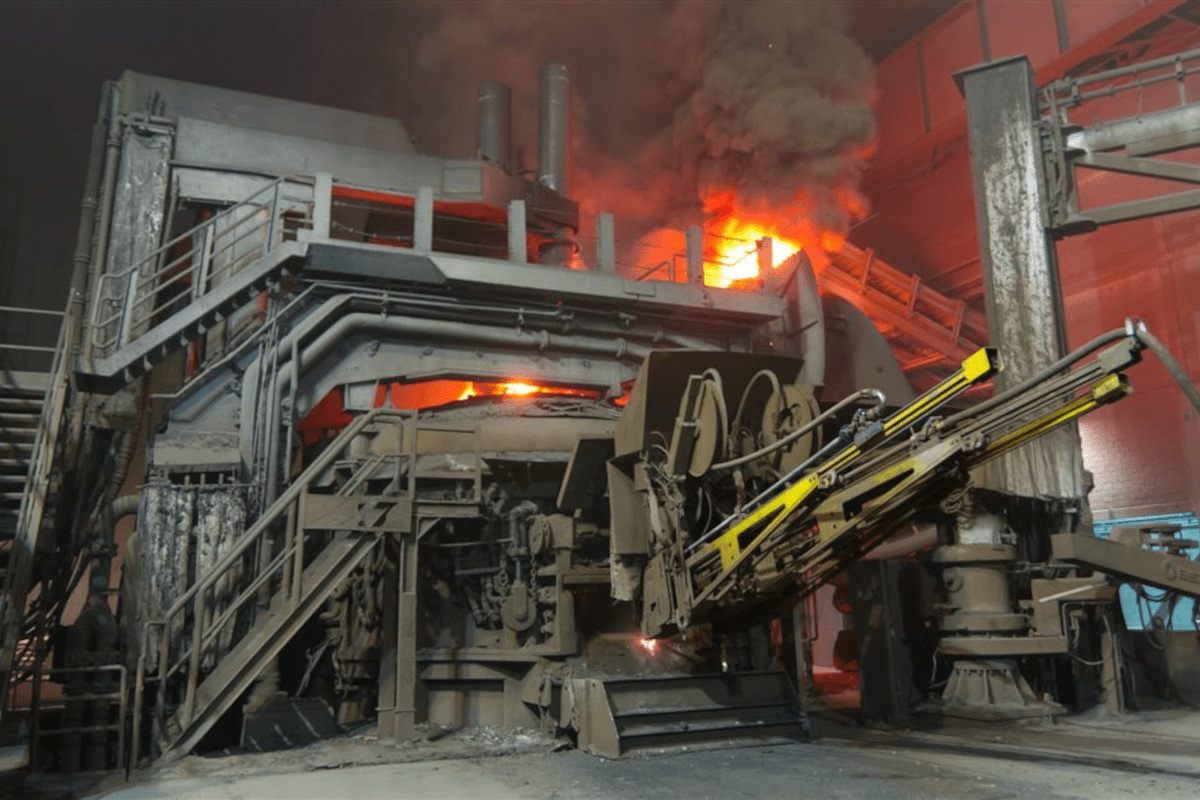
Iron and steel are the backbone of modern infrastructure and at the same time one of the key industries undergoing transformation toward climate neutrality. The research group Circular Iron & Steel Production investigates how iron and steel can be produced more efficiently, with lower emissions, and within sustainable material cycles.
The group focuses in particular on the electric arc furnace (EAF), the central technology for recycling-based steel production and an increasingly important platform for integrating hydrogen-based ironmaking routes. Our research addresses both scrap-based steelmaking and emerging direct reduced iron (DRI) – EAF routes, combining experimental work, industrial measurements, process modelling and modern data-driven methods.
The team is led by a senior researcher and co‑led by a doctoral researcher and currently consists of seven additional PhD researchers working as full-time scientific staff. In addition to research activities, the group contributes to teaching, including lectures on electric arc furnace steelmaking, and supervises student research projects at all levels.
Understanding metallurgical processes
Improving metallurgical processes begins with understanding how energy and materials are handled in these processes. A central part of our work therefore focuses on developing detailed energy and mass balances for industrial processes such as electric arc furnaces. These analyses help identify inefficiencies, reveal optimization potential and provide the basis for improved process control.
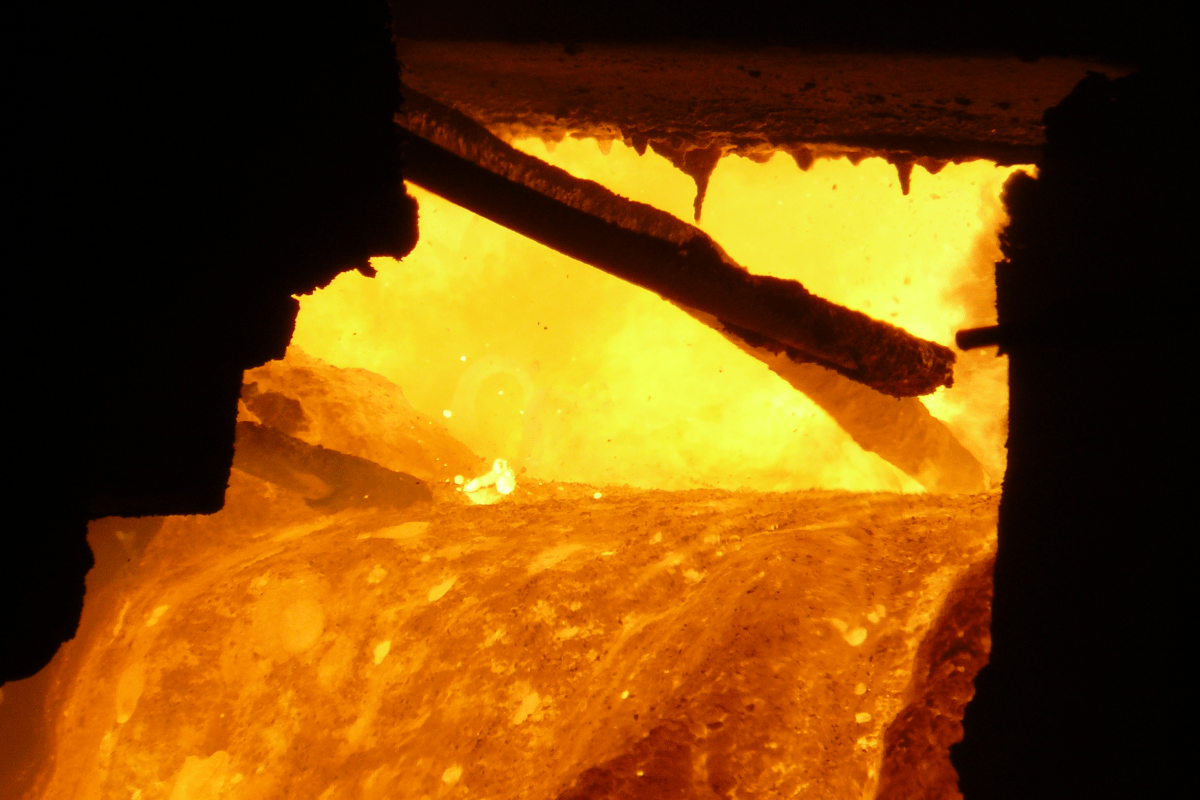
In industrial furnaces, however, many relevant quantities cannot be measured directly due to extreme temperatures, dust loads and mechanical stresses. As a result, important boundary conditions for energy and mass balances are often uncertain. To address this challenge, the group performs operational measurements on metallurgical units, particularly through the installation and operation of off‑gas analysis systems and complementary temperature and process measurements. These measurements provide valuable insights into reaction kinetics, energy flows and emission formation in the furnace.
From measurements to digital process models
Experimental observations are combined with dynamic process modelling to achieve a deeper understanding of furnace operation. The research group develops and continuously expands its in‑house simulation environment EAFProSim, which describes the complex interactions between scrap melting, slag formation, gas-phase reactions and heat transfer in the electric arc furnace.
The model enables the analysis of existing processes as well as the evaluation of new operating strategies and process routes, including the integration of hydrogen-based energy carriers or hydrogen-reduced DRI. EAFProSim is developed within research projects and is also applied by industrial partners to analyse plant operation and support process optimization.
Because many process variables cannot be measured directly, the group also develops soft sensors that combine physical models with plant data to estimate otherwise inaccessible quantities such as reaction rates, gas generation or thermodynamic states in the furnace.
AI-supported monitoring and process understanding
In recent years, machine learning and computer vision have become additional tools for improving process monitoring. Harsh metallurgical environments often limit the use of conventional sensors. Image-based methods allow process information to be obtained from a safe distance without exposing sensors to extreme conditions.
Current research applies computer vision methods to tasks such as bubble detection in water models of metallurgical reactors and hot heel determination in industrial electric arc furnaces. Combined with process models and plant data, these approaches provide new opportunities for advanced process monitoring and control.
Closing material cycles in iron and steel production
A second major focus of the research group is the development of circular material flows in iron and steel production. Metallurgical processes generate large quantities of by-products and residues, many of which contain valuable metals but are difficult to recycle in their original form.
The research group develops agglomeration technologies that convert such fine materials, such as dusts, sludges or slag components, into stable recycling products suitable for reuse in metallurgical furnaces. The agglomeration laboratory is equipped with an intensive mixer, pelletizing disk and stamp press systems, enabling the production and testing of a wide range of recycling agglomerates.
Particular attention is given to self-reducing agglomerates, in which fine iron-bearing materials are combined with carbon carriers to enable efficient metal recovery. At the same time, the group investigates strategies for replacing fossil carbon carriers with more sustainable alternatives, including biogenic carbon sources such as biochar and the use of hydrogen as an energy carrier or reducing agent.
Experimental facilities and industrial collaboration
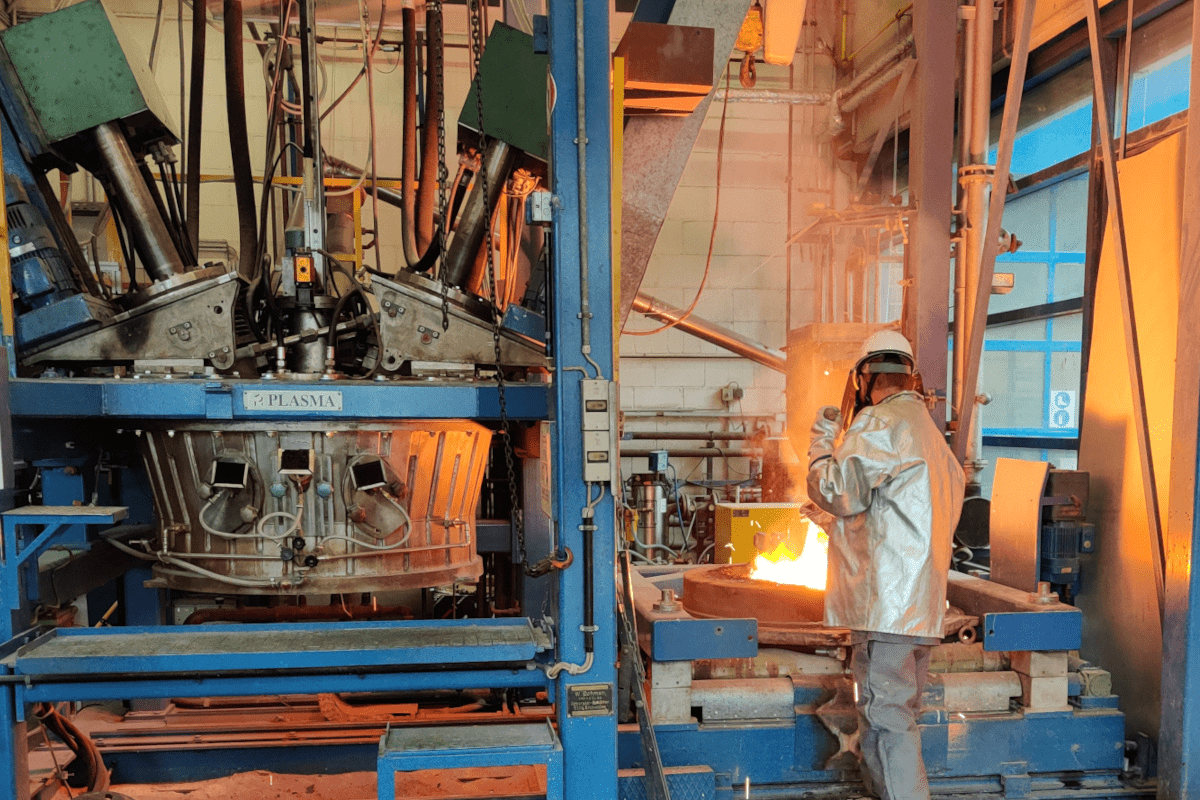
Experimental research is supported by dedicated pilot-scale facilities. At its Herzogenrath research site, the group operates a 600 kW AC pilot-scale electric arc furnace, which enables controlled experimental campaigns under realistic metallurgical conditions. The facility is used for investigating process reactions, validating process models and testing innovative concepts such as alternative carbon carriers or hydrogen-compatible burner systems.
The group works closely with industrial partners, including steel producers and equipment manufacturers. Collaboration takes place both in publicly funded research projects and through direct contract research and technical services. Through this close interaction with industry, research results can be directly translated into practical process improvements.
By combining experimental research, detailed process modelling, advanced measurement technology and modern data-driven methods, the research group contributes to the development of a more resource-efficient, low-emission and circular iron and steel industry.
Research projects
Ongoing research projects
- Optimized use of waelz kiln slag in iron foundries as an alternative secondary raw material — WäGieS (BMWE IGF)
- Use of biochar as a CO2-neutral reducing agent for the production of agglomerates from iron-containing residues — BioKoRed (BMWE ZIM)
- Valorization of wet biomass residues for sustainable steel production with efficient nutrient recycling — BioReSteel (EU RFCS)
- Multi-Sensor Systems for an optimized EAF Process Control — MultiSensEAF (EU RFCS)
Completed research projects
- Recovering valuable materials from metal-containing, dusty production residues through fibre waste-based briquetting — FaBrik (BMBF)
- Reduction of CO2 emissions through the flexible and efficient use of different energy sources at the electric arc furnace – FlexLBO (BMBF)
- Developing and enabling H2 burner utilization to produce liquid steel in EAF — DevH2forEAF (EU RFCS)
- Increasing the resource efficiency of metallurgical processes by agglomerating slags, dusts and sludges using stamp presses – ReMPA4S (AiF IGF)
- Retrofitting equipment for efficient use of variable feedstock in metal making processes – REVaMP (Horizon 2020)
- Development of a novel, modular retrofit package for electric arc furnaces up to 20 t (AiF ZIM)
- Cement-free brick production technology for the use of primary and secondary raw material fines in EAF steelmaking – Fines2EAF (EU RFCS)
- Development of a reference model for the life cycle assessment of electric steelmaking for process optimisation and CO2 savings – EcoSteel (BMBF)
- On-line slag composition analysis for electric arc furnaces – OSCANEAF (EU RFCS)
- Biochar for a sustainable EAF steel production – GREENEAF2 (EU RFCS)
- Valorisation and dissemination of EAF technology – VALEAF (EU RFCS)
- Development of an agglomerate brick from ladle slag and biocoal for use in the electric arc furnace in steel production (AiF ZIM)
- MegaCarbon – Resource-efficient and highly productive production of carbon fibres for a wide range of applications (Ziel 2 NRW EFRE)
- Development of a modular, retrofittable and energy-efficient vessel technology for electric arc furnaces (AiF ZIM)
- Sustainable EAF steel production – GreenEAF (EU RFCS)
- Increasing energy and resource efficiency in electric steelmaking through holistic, quality-guided production control – ENRECO2 (BMWi)
- Control of Nitrogen Oxide Emission at the Electric Arc Furnace – CONOX (EU RFCS)
- Improved EAF process Control using On-line Offgas Analysis – OFFGAS (EU RFCS)
- Fundamental investigations on the formation of nitrogen oxides in the electric arc furnace (DFG)
- Development of operating conditions to improve chemical energy yield and performance of dedusting in airtight EAF (EU ECSC)